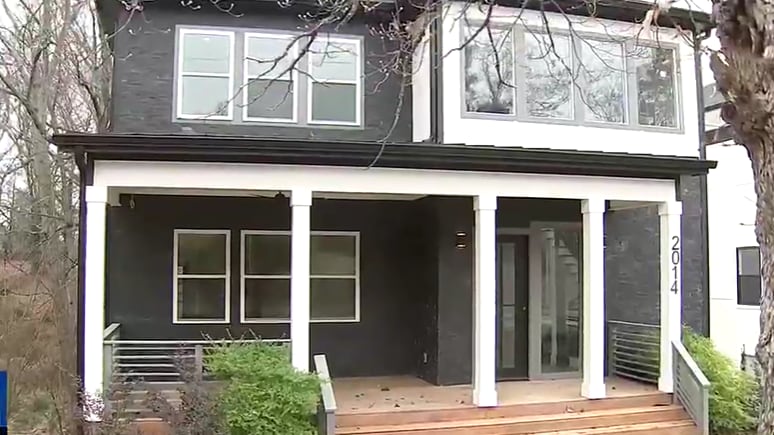
ATLANTA — The Atlanta City Council redefined what it considers a party house and released a list of neighborhoods where they’d be banned.
The move came Monday, with city councilmembers amending a more than 40-year-old ordinance to further restrict homes that are used for less than peaceful living.
In the ordinance, the city council said that “residential neighborhoods are designed for residential dwelling and the peaceful enjoyment of the residents,” but that there has been a recent “accelerated intrusion of commercial uses” for large-scale commercial events at so-called party houses.
[DOWNLOAD: Free WSB-TV News app for alerts as news breaks]
The city council added a definition for a party house in 2020 and created a set of districts where they were allowed, and a longer list of where they were not.
Now, the definition is again being amended to more strictly define a party house and more clearly set where they are allowed, or banned.
TRENDING STORIES:
- Convicted killer mistakenly released in Clayton County coming back to GA after his recapture
- GA couple sentenced for padlocking fridge, allowing son to molest half-sister in exchange for food
- Jason Carter rules out running for GA governor as wife Kate battles brain cancer
According to the city council ordinance, a party house is:
“A single-family, two-family, or multi-family dwelling unit and its premises that is used for a commercial event which includes a ceremony, reception, large scale gather or party that charges a fee for the use of the property or an entry fee, donation or operation cost from its attendees to gain entry.”
The new definition also clarifies that the definition does not apply to homes that are used for events by 501(c)(3) nonprofits or businesses, civic, professional or political organizations or campaigns.
The ordinance also sets a policy that party houses are permitted in certain districts, so long as they are issued a special administrative permit or special use permit, and as long as the property in question is not within 150 feet of the property line of one of the zones where party houses are banned.
The following areas have bans on party houses:
| Zoning District | Description |
|---|---|
| R-1 | R-1 Single-Family Residential District |
| R-2 | R-2 Single Family Residential District |
| R-3 | R-3 Single Family Residential District |
| R-3A | R-3A Single Family Residential District |
| R-4 | R-4 Single Family Residential District |
| R-4A | R-4A Single Family Residential District |
| R-4B | R-4B Single Family Residential District |
| R-5 | Two-Family Residential District |
| R-G | R-G Residential General District |
| O-I | Office-Institutional District Regulations |
| I-1 | Light Industrial District |
| I-2 | Heavy Industrial District |
| PD-H | Planned Development Housing District |
| PD-MU | Planned Development Mixed Use |
| PD-OC | Planned Development Office- Commercial |
| PD-BP | Planned Development Business Park |
| MR | Multi-Family Residential |
| SPI-1 Subareas 4 | Downtown |
| SPI-3 Subareas 1, 2, 3 | English Avenue |
| SPI-4 | Ashview Heights and Atlanta Univ. Ctr. |
| SPI-5 | Inman Park |
| SPI-6 | Poncey-Highland |
| SPI-7 | Candler Park |
| SPI-11 Subareas 4, 5, 6, 7, 8 | Vine City and Ashby Station |
| SPI-15 | Lindbergh Transit Station Area |
| SPI-17 | Piedmont Avenue |
| SPI-18 Subareas 4, 5, 6, 7, 8, 9 | Mechanicsville Neighborhood |
| SPI-19 Subareas 5, 6, 7 | Vine City |
| SPI-20 Subareas 5, 6 | Greenbriar |
| SPI-21 Subareas 5, 6, 7 | Historic West End/Adair Park |
[SIGN UP: WSB-TV Daily Headlines Newsletter]
©2025 Cox Media Group


